Q1: What specific skill did I develop in the last 6 months that I couldn’t do before?
What can you do now that your 6-month-younger self couldn’t?
- Common traps
- Writing traits: “I became more confident”
- Hiding behind team outcomes: “We improved our funnel”
- Naming tasks, not skills: “Wrote a lot of SQL”
- What sharp looks like
“I can now drive roadmap alignment across sales, product, and CS without exec escalation.”
“I can run hiring loops end-to-end and close high-signal candidates independently.”
“I learned to build attribution models that helped reallocate 30% of paid spend.”
- To unlock thinking, ask
- What did I struggle to do 6 months ago that now feels easy?
- What do others now trust me to own without review?
- Where have I gone from execution to design?
Q2: Who would hire me tomorrow for a role I actually want, and why?
What’s your market position? Can you name a real company (or type of company), at a real stage, with a real need for which you are the obvious solution?
- Common traps
- Overgeneralising: “Any fast growing startup”
- Confusing role fit with value creation: “I’m a PM, they need PMs”
- Hiding behind brand names: “Google would hire me”
- What sharp looks like
Series B SaaS startups struggling with churn but too early for a VP Growth: I’ve led onboarding and retention rebuilds in messy mid-stage teams.
D2C brands in the $5 20M ARR range who need a growth marketer to scale paid beyond Meta, and clean up attribution.
Product orgs scaling from 3 → 7 PMs who need someone to bring process without bureaucracy: I’ve done that transition.
- To unlock thinking, ask
- What painful problem have I already solved that others are about to face?
- What stage of company breaks if I’m not in the room?
- Who’s building what I want to build next?
Q3: What’s the most important thing I need to learn next?
What this is really asking:
What constraint is holding you back from that next role, that next level of impact, or that next shift in leverage?
- Common traps
- Writing vague themes: “Product strategy”
- Listing things you’re already good at (to feel safe)
- Overreaching: “Be a great leader” without knowing what that means
- What sharp looks like
“How to manage a designer or engineer without being in their function”
“How to run quarterly planning with cross-functional stakeholders”
“How to build conviction without needing consensus”
- To unlock thinking, ask:
- What makes me hesitate in meetings I should own?
- What skill do I secretly admire in others?
- What gets me 80% of the way but never across the line?
reading the patterns
those three minutes tell you everything.
if minute one is empty
you’re in maintenance mode. Doing work without building expertise. Every month that passes, your market value either stays flat or declines.
if minute two is vague:
you don’t understand your actual worth. you’re probably underpricing yourself or chasing roles you’re not positioned for.
if minute three lacks clarity
you’re hoping career growth happens to you instead of building it deliberately. hope isn’t strategy, yo!
Final note
Your answers will feel shaky the first time. That’s the point. The act of answering is the clarity-building mechanism.
Repeat monthly. Track what shifts. Patterns will emerge:
- Are your skills stacking or scattering?
- Is your positioning consistent or blurry?
- Are you learning what’s next or just going deeper on what’s safe?
This the only real career strategy.
Everything else is just noise.
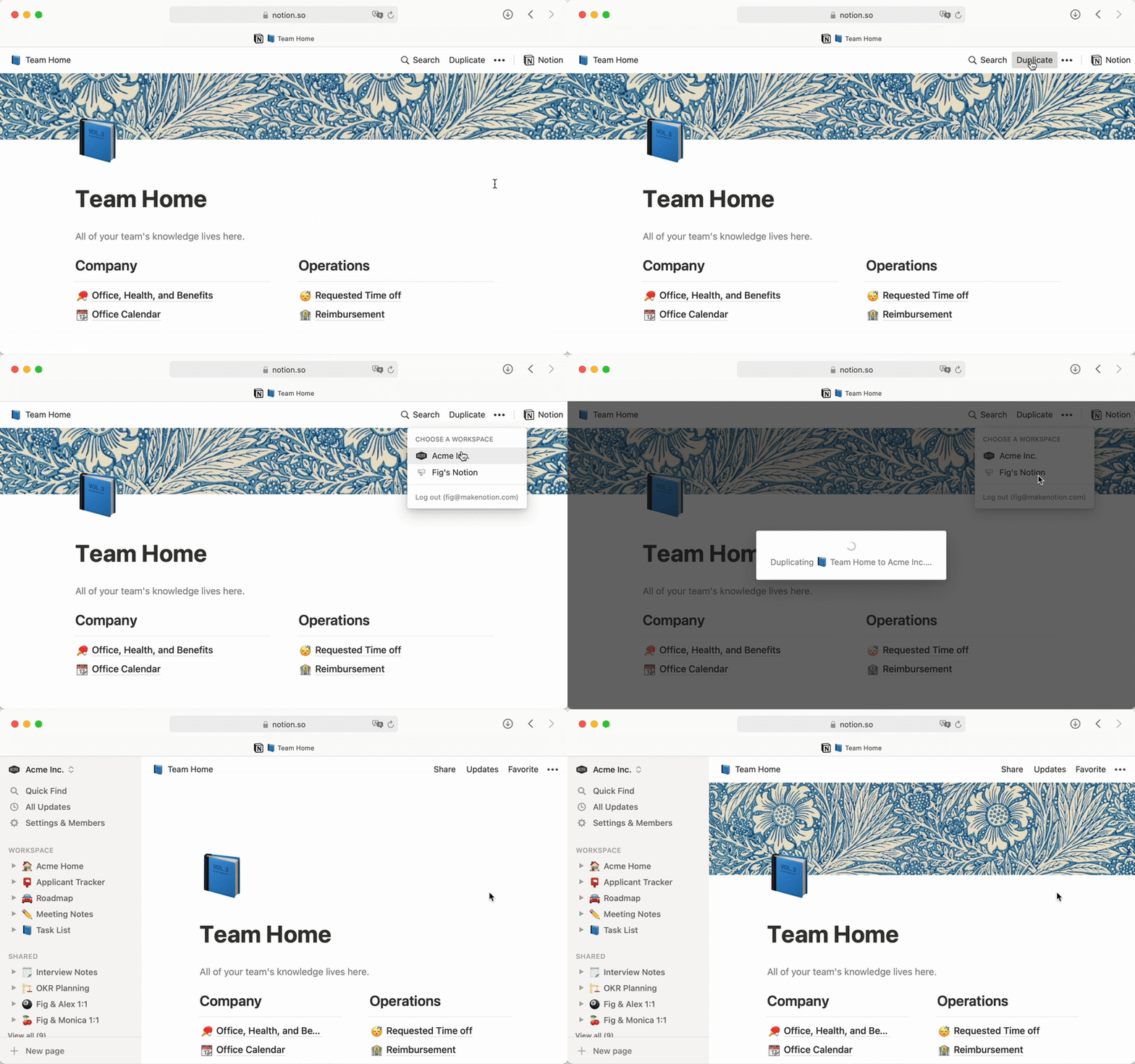
?How to duplicate this worksheet?
Click the duplicate button on the top right corner.